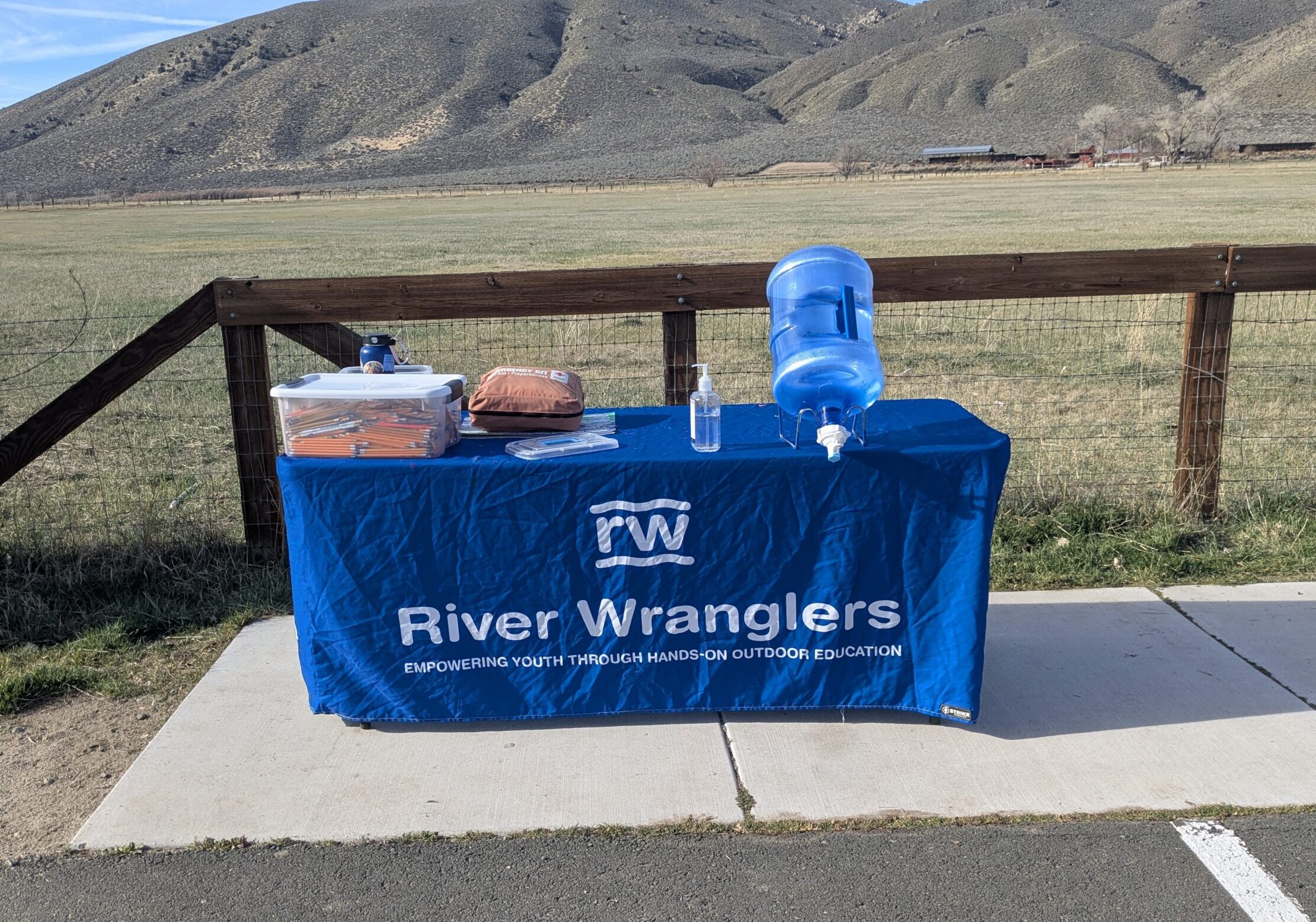
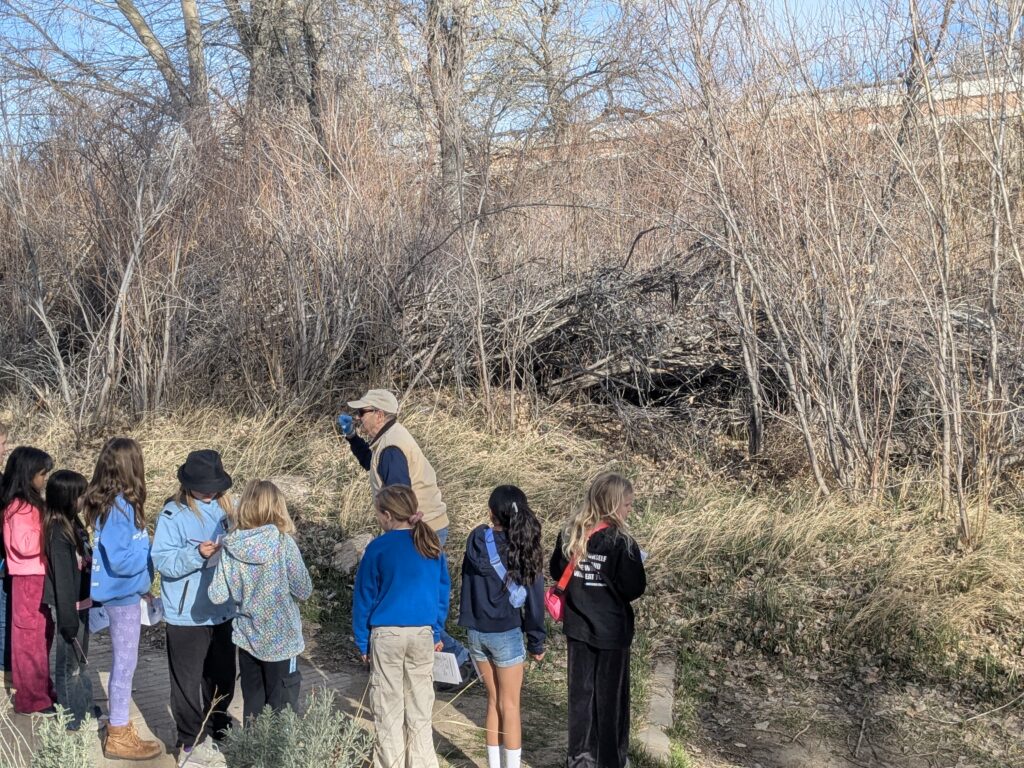
The River Wranglers water and first aid station during trout release at Carson River Park.
What is NOER?
River Wranglers brings youth across Nevada to the Carson River watershed, where learning becomes up close and personal as students. This approach to education is made possible thanks to the Nevada Outdoor Education and Recreation grant. The Nevada Outdoor Education and Recreation grant (NOER) provides funding across the state to programs that get Nevada youth outdoors and learning. In 2025, thanks to support from the Nevada Conservation League and various community partners, that funding was continued through AB108, unlocking opportunities for organizations like River Wranglers to meet kids where they’re at and show how learning can transform in the great outdoors.
Students Release Trout Into the Carson River
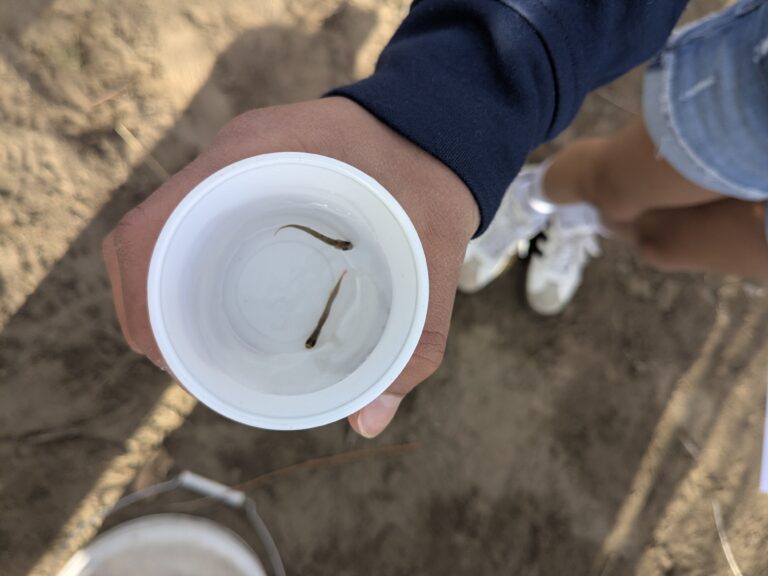
On a sunny Friday morning in March, 40 fourth-grade students from Carson Montessori School gathered along the Carson River, each holding a small cup with a trout they had raised in their classroom.
One by one, they stepped forward and released them into the water.
“This one’s Nike, and this one is Adidas,” one student said, carefully pointing before letting them go. Over winter, the students watched as the trout grew from fragile eggs to healthy fry, ready to face what the river had in store.
A student named these trout ‘Nike’ and ‘Adidas’ before releasing them into the Carson River.
For weeks, these students had learned about the trout life cycle in their classroom. But here, standing at the river’s edge, that learning became something they could see, touch, and take part in.
As the trout swam away, the energy ignited. Hands shot up. Questions came quickly. Students leaned in closer.
If you’ve ever been around children in a classroom setting, and then you get to be with those same students out at the river… More often than not, the most beautiful part of this job is seeing their face and body just come to life.
Moments like this don’t happen by accident. They take time, coordination, and funding to make possible.
Where Learning Meets the River with River Wranglers
For over 20 years, River Wranglers, a Northern Nevada nonprofit, has been bringing students out to the Carson River to learn by doing. They work with elementary and middle school students across Carson City, Douglas, Lyon, Churchill, and Storey counties.
Their programs connect classroom learning with hands-on experiences outdoors: Raising trout in class, testing water quality, and exploring the watershed where they live.
The best part? These experiences are provided at no cost to schools thanks to funding like the NOER grant, made possible by legislation supported by the Nevada Conservation League.
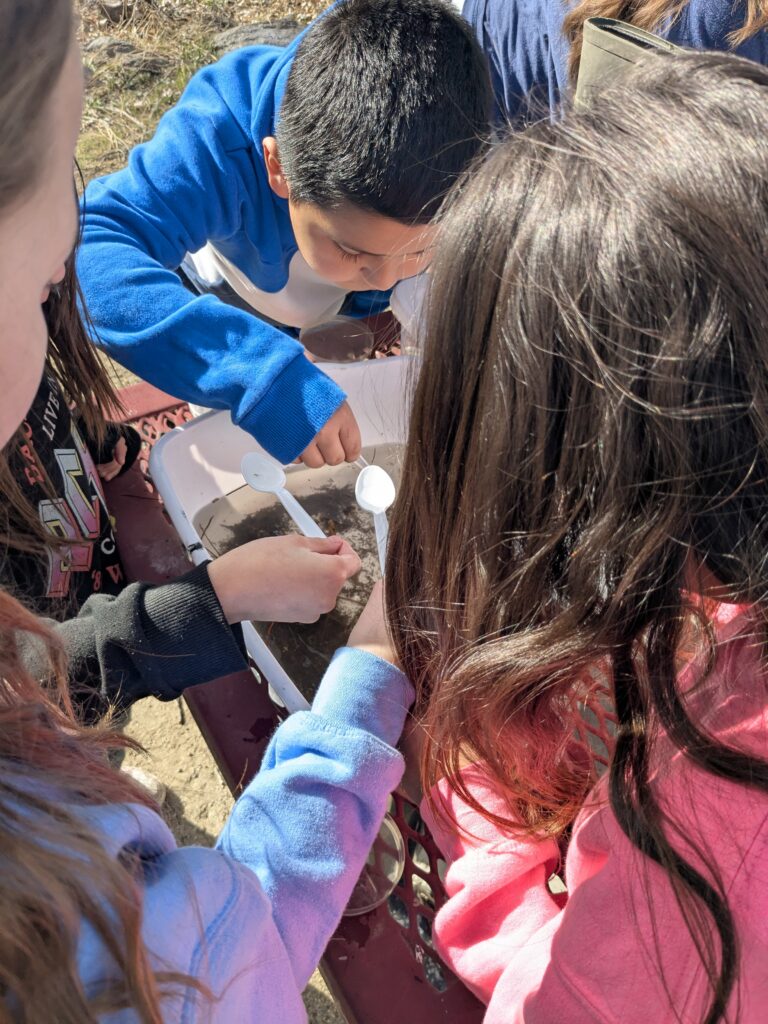
Students identify invertebrates found along the Carson River watershed.
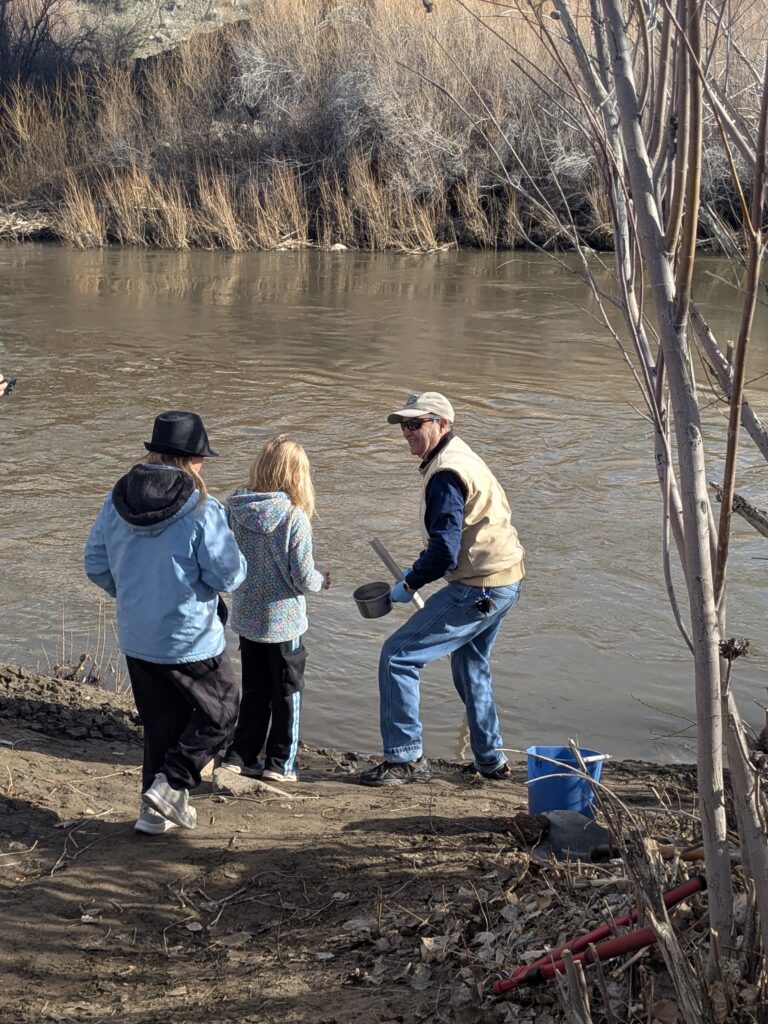
A volunteer helps students release their trout fry into the Carson River.
It just was like the perfect storm of a job for me personally. I love being outside, and I love working with kids.
Many students go years without finding the adventure that’s right in their backyards. River Wranglers changes that.
They help students learn by doing, whether that means raising trout in the classroom, testing water quality, or standing at the river’s edge and seeing a watershed up close.
But the journey here hasn’t been easy.
A Program at Risk
When Rebecca Feldermann, the organization’s executive director, stepped into her role, River Wranglers was in a fragile place.
The organization relied heavily on a single funding source. When that funding shifted after the COVID-19 pandemic, there were real questions about whether River Wranglers could continue. They were at a crossroads: How could they keep educating students without stable funding?
I came to find out that it was a very real concern… that River Wranglers was going to have to close their doors.
Programs like Trout in the Classroom, river workdays, and community outreach – all were at risk.
For a small organization serving over 7,000 students each year, that uncertainty meant fewer opportunities for students to connect what they were learning in school to the river in their own community.
NOER Helped Stabilize and Sustain the Work
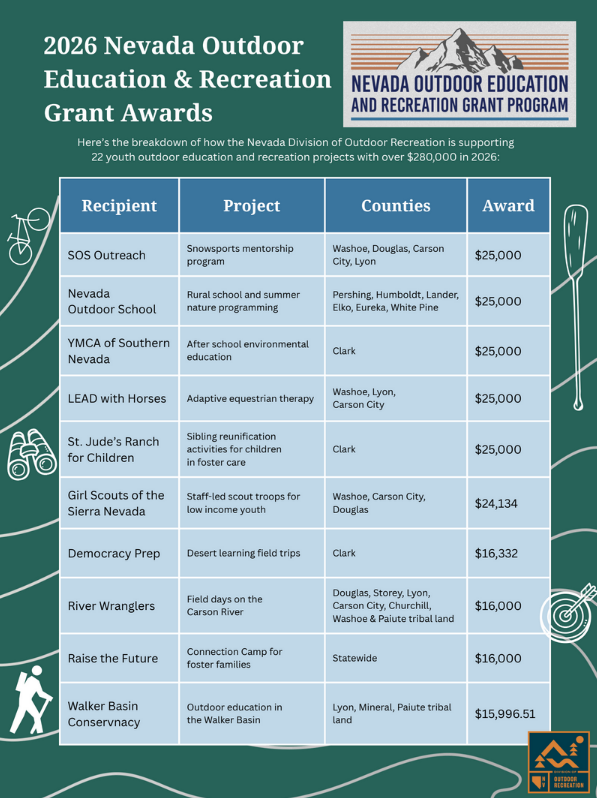
River Wranglers received $25,000 in 2025 and $16,000 in 2026 through the Nevada Outdoor Education and Recreation (NOER) Grant Program. Today, it’s one of their top three funding sources.
That support didn’t just keep the organization running,
it changed what they could say YES to.
With NOER funding in place, River Wranglers was able to continue and expand the hands-on work they’re known for: Trout in the Classroom, field days along the Carson River, and outreach that connects students to their watershed.
Students learn how to release trout.
Before this funding, River Wranglers had to be more selective about which classrooms they could serve, how many programs they could run, and what age groups they could reach.
After NOER, that changed.
When we had been awarded that [grant], the trout numbers started picking up. We were like, ‘Okay, we have this funding, let’s do it. Let’s do all the classes. Let’s do every school that has a tank.'
That meant expanding beyond their core programs.
“We also expanded some of our programming to include the Seasonal Changes program with first graders,” Rebecca said, “and created youth days for second and third graders, not just the fourth and fifth grade work days.”
That means students are being introduced to the river earlier and building that connection over time.
The funding also helped River Wranglers reach more communities across Carson City, Douglas, Lyon, and Storey counties, including schools that would not otherwise have the resources to participate.
Today, River Wranglers reaches more than 7,000 students each year.
For staff, that stability is tangible.
NOER has really been a saving grace. It has kept us afloat. It honestly feels like a weight off our chest. We can breathe, we can continue, we can keep planning things.
NOER did not solve every funding challenge River Wranglers faces. But it provided enough stability to keep these experiences going and reach more students than ever before.
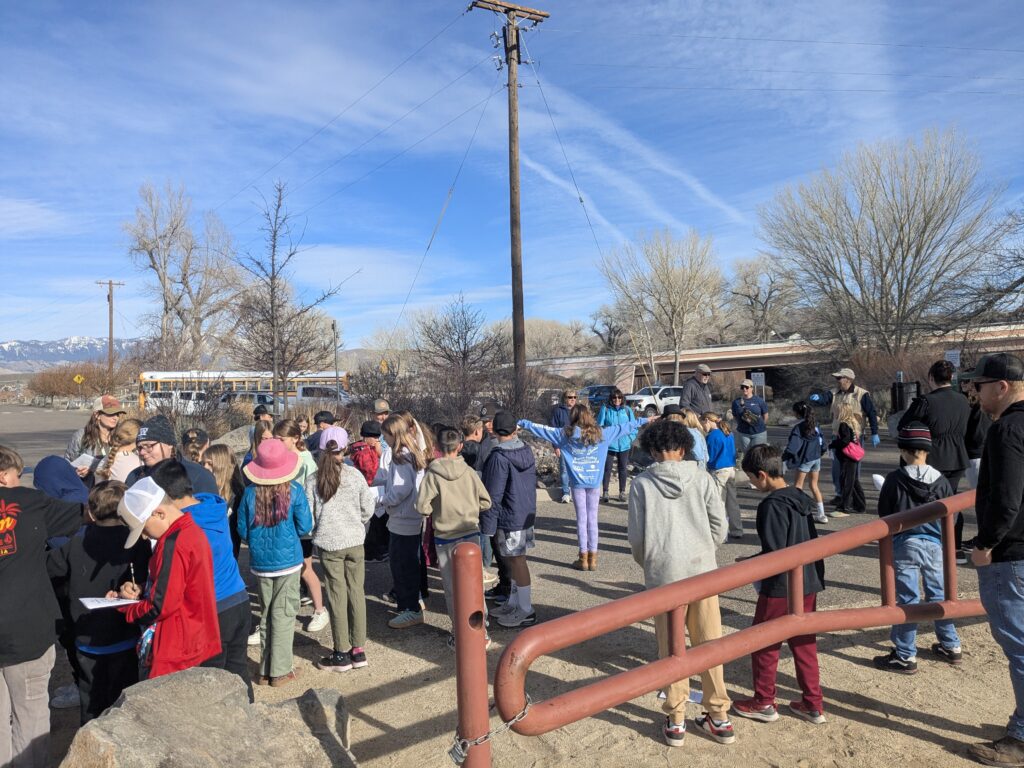
Students gather for a welcoming discussion prior to the release.
What Students Experience on the River
Back at the trout release, the day unfolded in motion.
Students moved through stations – learning about trout life cycles, testing water quality, and exploring habitats along the river.
They asked questions. They compared what they learned in class to what they were seeing in front of them. They watched their trout swim confidently into the current below.
One student called out, “Goodbye, Alvin and Theodore!” as their fish disappeared into the water.
Moments like that stay with students, because they’re seeing and doing, not just reading.
A volunteer preparing the chute to release trout fry into the Carson River.
Students fill out their journals, exchanging ideas.
Students “swim” like trout on their way to the next stage in the life cycle.
Identifying a caddis fly.
Access Isn't Always Guaranteed, Even Close to Home
Being near open space does not always mean our students can easily get to it.
That is one of the challenges River Wranglers sees across the communities it serves. Some students live close to trails, parks, and waterways, but still have few chances to experience those places through school or with their families. In Carson City, for example, students may live near open space and still have limited experience with the Carson River itself. In Lyon County, distance and transportation can make access even harder.
They'll often have barriers, in relation to just transportation in general… If they haven't been out to the river, it's because it's not within walking distance, and they don't have — either the parents are both working tons, or they don't have vehicles to get out there. Or their parents just plain don't have the time.
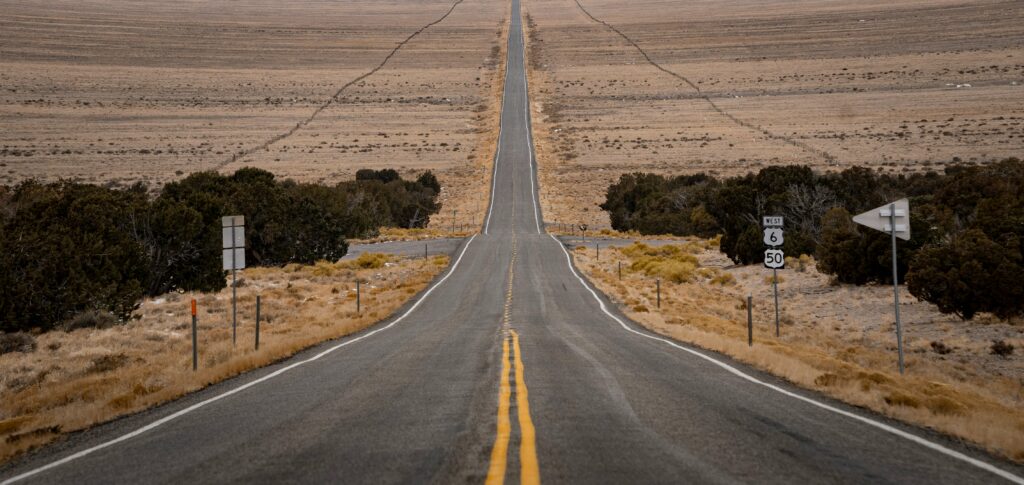
Highway 50 in Fallon, NV / Intricate Explorer
That is where support for programs like River Wranglers matters.
Funding helps cover the practical pieces that make field-based learning possible, especially transportation.
“We had 100 students, middle school students come out from Silver Stage Middle School. And we funded the transportation for them to be able to get out there,” Rebecca shared.
That kind of support can make the difference between a trip happening and a trip getting canceled.
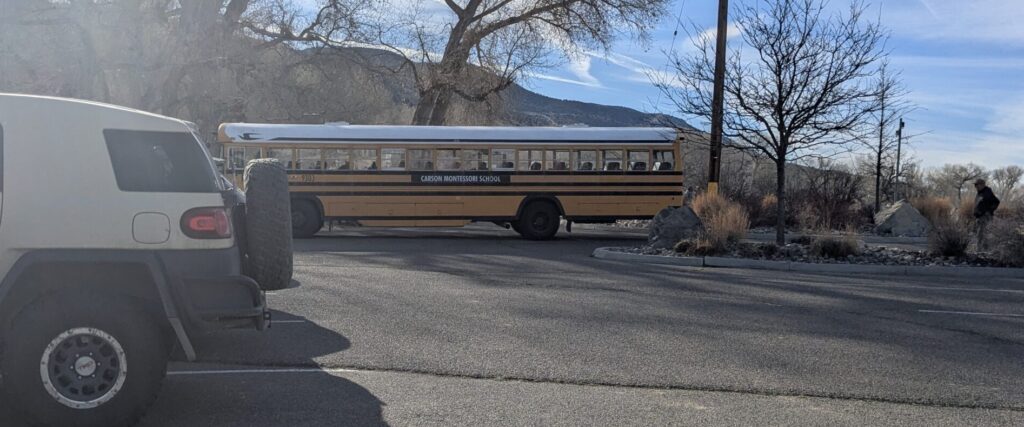
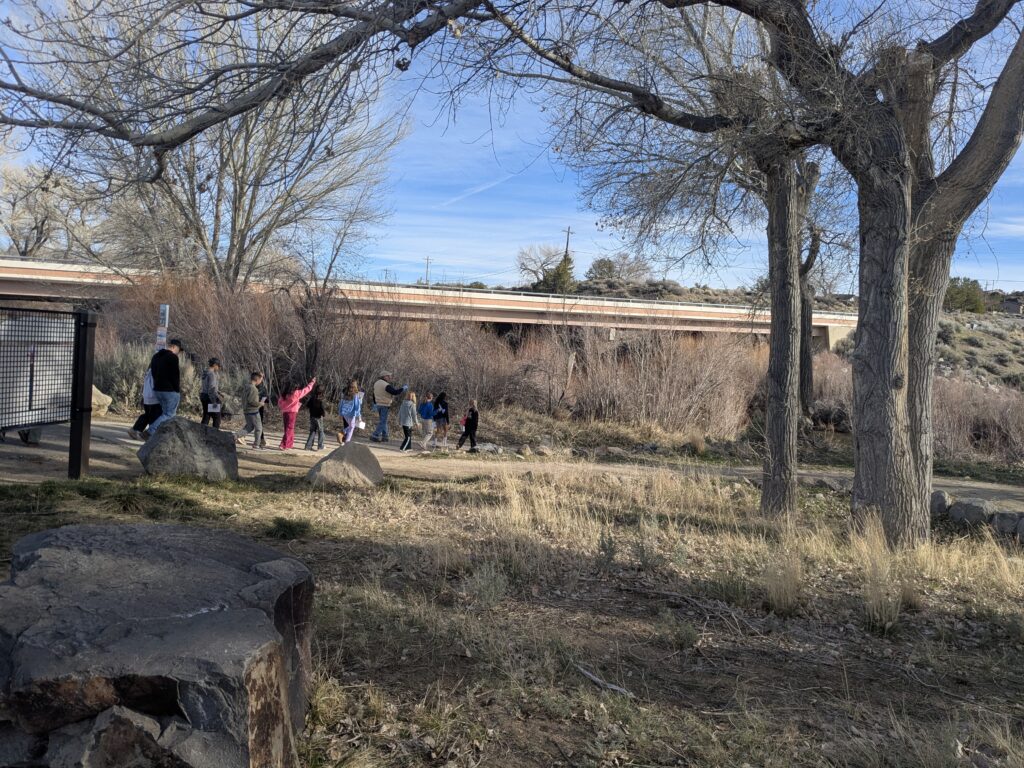
The bus for Carson Montessori’s trip to Carson River Park.
River Wranglers’ work shows that access is not just about geography. It is also about whether students have the time, transportation, and support to get there.
NOER funding helps close some of that gap, but it does not erase it.
What River Wranglers Could Do With More Support
Even with NOER support, River Wranglers still has to make tradeoffs.
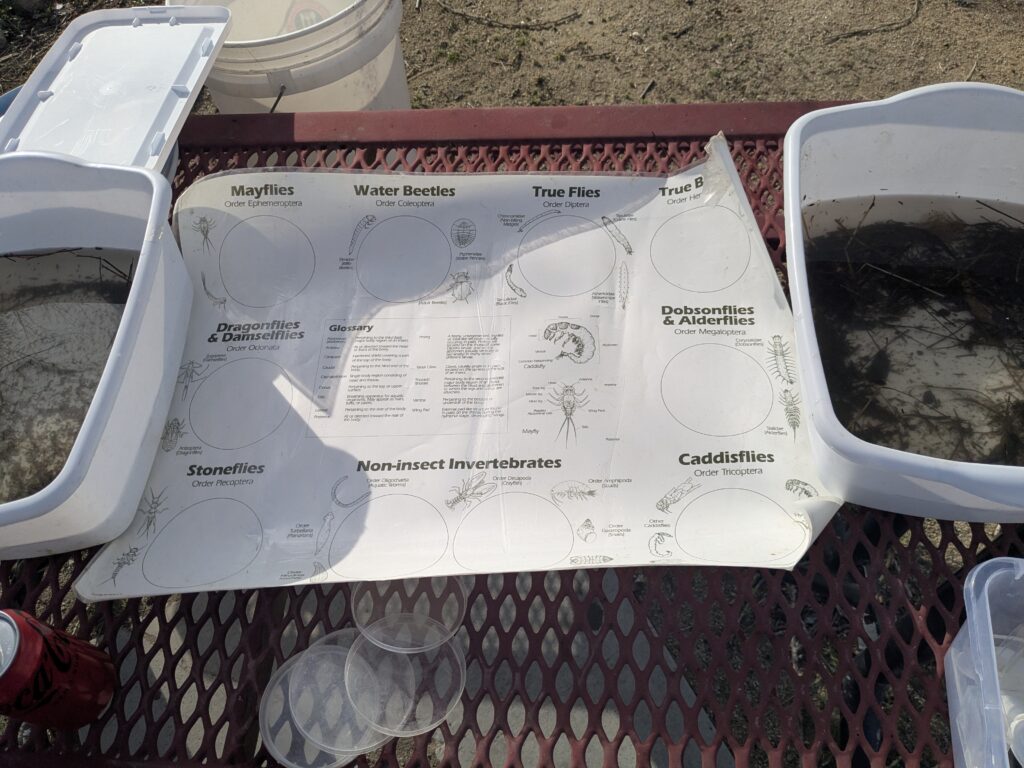
A worn chart for identifying invertebrates.
One of the clearest examples is something simple: maps.
As part of their watershed lessons, students usually take home a map of the Carson River, something they can use to connect what they learned to the places they live. The maps also link to an online tool so students can revisit and share what they learned with their families.
This will be year two without [maps].
Instead of one per student, River Wranglers now provides one map per classroom.
“It stinks not being able to give them that map,” she said.
With more funding, that’s one of the first things they would change.
“I would probably put in an order for like 10,000 maps right off the bat.”
The same tradeoffs show up elsewhere.
River Wranglers has to decide which outreach events to attend and which schools they can say yes to. In some cases, they’ve had to turn down schools that needed help covering transportation.
When you get into the more rural areas, the farther you have to go, the less likely they are to fund those field trips or the buses to get out there. It always stinks when you have to say no.
With more consistent funding, River Wranglers could take on more of those requests and reach additional students each year.
Why This Matters for NOER in 2027
River Wranglers’ story shows what state funding can support, and where it falls short.River Wranglers’ story shows what state funding can support, and where it falls short.
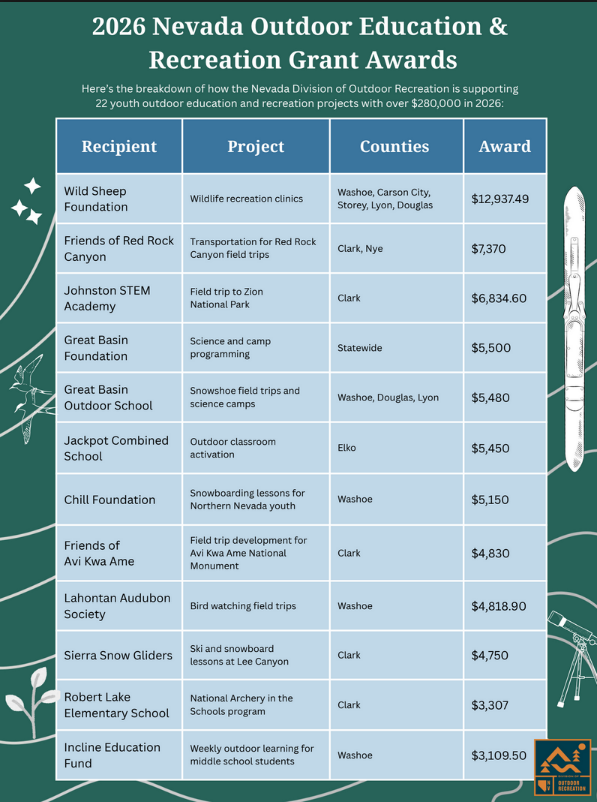
List of NOER 2026 grantees / Nevada Division of Outdoor Recreation
That gap means programs that are already reaching students, as well as those ready to do similar work, still have to scale back or wait.
River Wranglers is one example. The work is there. The demand is there. But funding still shapes how many students they can reach.
In 2027, Nevada lawmakers will have another opportunity to invest in the Nevada Outdoor Education and Recreation Grant Program, building on existing programs and helping more students take part in hands-on learning, as we saw along the Carson River.
Join Us
We’re sharing stories like River Wranglers because they show what’s working, and what’s still needed.
If you’re a NOER grantee, we’d love to help share your story: